DIY Salad Dressings: Easy Recipes and Tips for Better Flavor
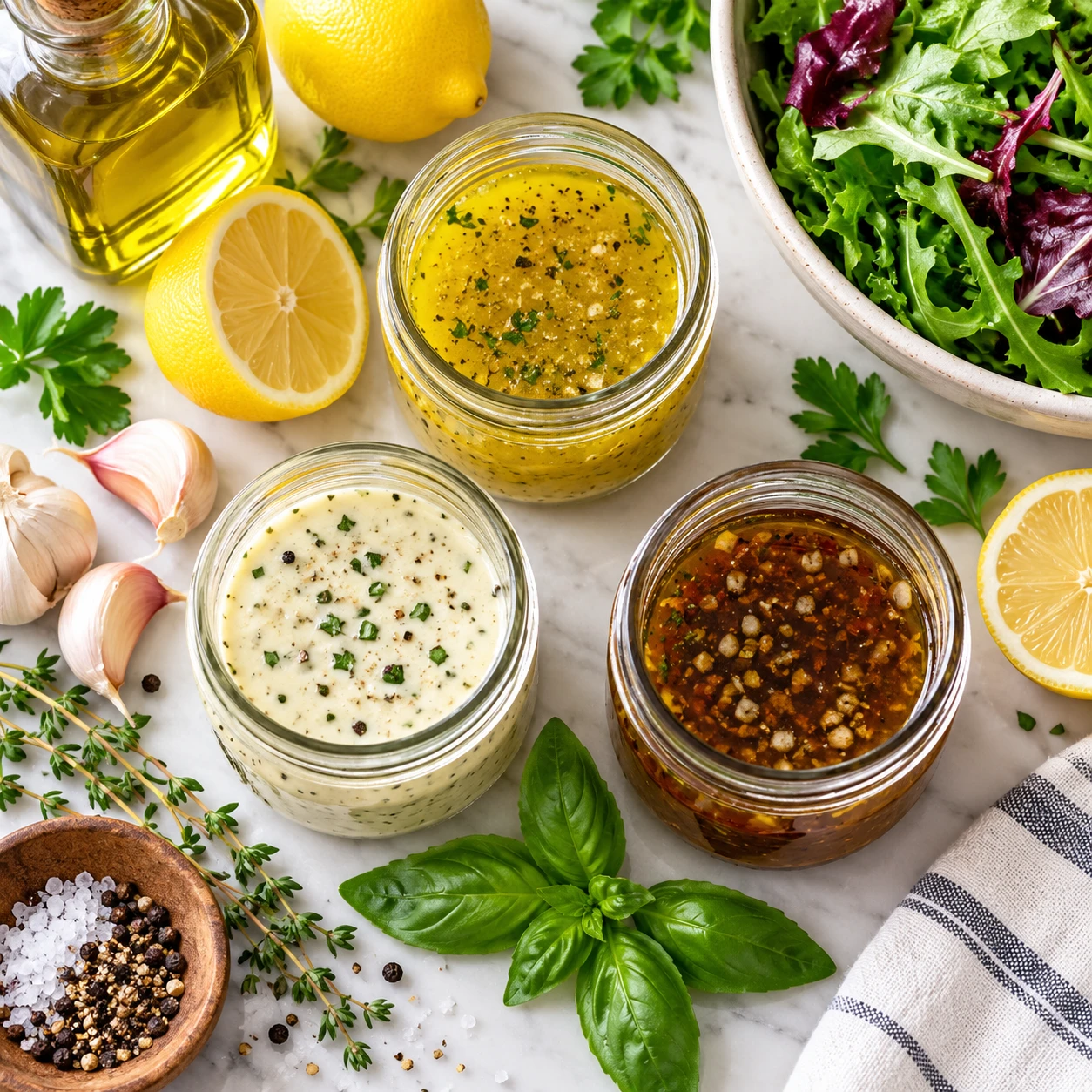
A good homemade salad dressing can turn a bowl of everyday greens into a meal you look forward to. With a few pantry staples, you can make a classic vinaigrette, a creamy mustard dressing, or a bright herb dressing, then adjust each one to suit the salad.
The key is to start with a simple formula and taste as you go. Olive oil, vinegar or lemon juice, and a few well-chosen condiments give you plenty of room to experiment without needing a complicated recipe.
The Basic Formula for Homemade Salad Dressing
A homemade salad dressing starts with oil, an acidic ingredient, and flavorings. For a flexible vinaigrette, mix three parts oil to one part acid, then adjust the ratio to taste.
For one small batch, combine 3 tablespoons olive oil with 1 tablespoon vinegar or lemon juice. Add 1 teaspoon Dijon mustard, a pinch of salt, and black pepper. Taste it with a leaf of the salad you plan to serve; greens and toppings can change how the dressing tastes.
The ratio is a starting point, not a rule. Use a little more acid for a brighter, sharper dressing, or add oil if the flavor feels too tart. Dijon mustard adds savory flavor and helps the ingredients stay blended for longer. Honey can soften sharp vinegar, while garlic, herbs, and spices add character.
Think in three parts: oil for body, acid for brightness, and flavorings for personality. Once you have that balance, it is easy to make a dressing from what is already in your kitchen.
Essential Ingredients and Flavor Boosters
The best DIY salad dressings rely on a few ingredients that each have a clear job. Choose an oil and acid you enjoy, then use condiments, herbs, and seasonings to build flavor.
Oil: Extra-virgin olive oil brings a fruity, peppery taste that suits many vinaigrettes. For a milder flavor, try a neutral oil or blend it with olive oil. Strongly flavored oils can dominate delicate greens, so use them sparingly.
Acid: Red wine vinegar is bold and savory; apple cider vinegar is fruitier; white wine vinegar is lighter. Balsamic vinegar adds sweetness and a deeper flavor. Lemon juice gives a fresh, clean tang, while lime juice works well with cilantro, cumin, or chili.
Condiments and seasonings: Dijon mustard helps emulsify a vinaigrette and adds a little sharpness. Honey balances acidity, while mayonnaise or tahini can make a dressing creamy. Add salt and pepper in small amounts, then try minced garlic, onion, smoked paprika, or chili flakes.
Fresh herbs such as parsley, dill, basil, chives, and cilantro bring a lively finish. Dried herbs are more concentrated, so start with about one-third as much as you would use fresh and let the dressing sit for a few minutes before adjusting.
Easy DIY Salad Dressing Recipes
These three homemade salad dressing recipes use common ingredients and take only a few minutes to mix. Each recipe makes about ¼ cup, enough for several servings depending on how lightly you dress your salad.
Classic Dijon Vinaigrette
- 3 tablespoons olive oil
- 1 tablespoon red wine vinegar
- 1 teaspoon Dijon mustard
- ½ teaspoon honey, optional
- Salt and black pepper to taste
Whisk the vinegar, Dijon, honey, salt, and pepper in a small bowl. Slowly whisk in the olive oil until the dressing looks slightly thickened. For a softer, less sharp version, use white wine vinegar or lemon juice.
Creamy Mustard Dressing
- 2 tablespoons plain yogurt or mayonnaise
- 1 tablespoon lemon juice
- 1 teaspoon Dijon mustard
- 1 teaspoon olive oil
- 1 to 2 teaspoons water, as needed
Stir the yogurt or mayonnaise with lemon juice and Dijon, then mix in the oil. Add water a teaspoon at a time until it is easy to drizzle. Yogurt gives a tangy, lighter texture; mayonnaise makes the result richer and silkier.
Fresh Herb Dressing
- 3 tablespoons olive oil
- 1 tablespoon lemon juice
- 1 tablespoon finely chopped parsley, dill, or a mix
- ½ teaspoon Dijon mustard
- 1 small garlic clove, finely grated
- Salt and pepper to taste
Whisk the lemon juice, mustard, garlic, salt, and pepper together. Add the olive oil, then stir in the herbs. Let the dressing stand for about 10 minutes so the garlic and herbs can flavor the oil. Taste before serving and add more lemon or salt if needed.
How to Balance and Adjust Your Dressing
To fix a homemade dressing, identify what is out of balance and change one ingredient at a time. Taste after each small adjustment so you do not swing too far in the other direction.
- Too sharp or sour: Whisk in a little more oil, or add ¼ teaspoon honey. If the dressing is already rich, a small spoonful of water can soften the acidity without making it oily.
- Too rich or oily: Add vinegar or lemon juice, a few drops at a time. A pinch of salt can also make flavors clearer, but taste before adding more.
- Too thick: Thin it with water, citrus juice, or a little vinegar. Water is the most neutral choice when the flavor is already balanced.
- Too mild: Add salt, pepper, Dijon, garlic, or another small splash of acid. If the ingredients taste muted, salt is often the first adjustment to try.
One common mistake is judging a dressing by itself. A crisp, bitter green may need a slightly sweeter dressing, while a salad with fruit or roasted vegetables may already bring enough sweetness. Taste the dressing on the food, not only from the spoon.
Mixing, Emulsifying, and Storing Dressings
Whisking or shaking a dressing blends oil and acid into a temporary emulsion, while mustard or another thick ingredient can help slow separation. Store homemade dressing in a clean, sealed container in the refrigerator, and check its ingredients before deciding how long it will keep.
Three easy mixing methods
- Bowl and whisk: Combine the acid and flavorings first, then slowly whisk in the oil. This gives you good control over texture.
- Jar and shake: Add everything to a jar with a tight lid and shake vigorously. It is quick, easy to store, and useful for small batches.
- Blender: Blend for a smoother, thicker dressing, especially when using fresh herbs, garlic, or creamy ingredients. A blended dressing may separate later, so shake or stir it again before serving.
Oil and water-based ingredients naturally separate over time, so separation does not mean a vinaigrette has spoiled. Shake it before use. Refrigerate dressings containing fresh garlic, herbs, yogurt, or other perishable ingredients, and use clean utensils when serving. For specific food-safety guidance, consult the USDA’s cold food storage charts. When in doubt, discard a dressing with an off smell, unusual appearance, or uncertain storage history.
For the best texture, make only as much as you expect to use within a few days, especially for recipes with fresh ingredients. Olive oil can turn cloudy or firm in the refrigerator; let it sit at room temperature briefly, then shake it well.
Pairing Dressings with Salads and Other Foods
Match a dressing’s weight and flavor to the ingredients it will coat. Light vinaigrettes suit delicate leaves, while creamy or bolder dressings stand up to hearty greens, grains, and roasted vegetables.
- Delicate greens: Try lemon juice, mild vinegar, and olive oil with butter lettuce, baby spinach, or tender spring greens.
- Bitter or sturdy leaves: Pair kale, arugula, or radicchio with Dijon, honey, or a creamy dressing to balance their stronger flavor.
- Grain and bean salads: Use a bold vinaigrette with red wine vinegar, garlic, and herbs. Grains and beans absorb flavor, so season the dressing generously and toss while they are still slightly warm.
- Roasted vegetables: Add a lemon-herb dressing after roasting for freshness, or use balsamic vinaigrette for a sweeter, deeper finish.
Homemade dressing also works as a quick marinade for vegetables, tofu, or chicken. Set some aside before it touches raw meat, and do not reuse marinade that has been in contact with raw ingredients unless it is handled safely. For leafy salads, start with a small amount, toss, and add more only if the leaves still look dry.
Homemade Salad Dressing FAQs
How long does homemade salad dressing keep?
It depends on the ingredients and storage conditions. Refrigerate homemade dressing in a clean, sealed container and use it promptly, especially if it contains fresh herbs, garlic, yogurt, or other perishable ingredients. Follow current food-safety guidance and discard anything with signs of spoilage.
How can I make a dressing creamy without dairy?
Blend tahini with lemon juice and water for a creamy, sesame-forward dressing. You can also blend soaked cashews or use a small amount of mayonnaise made without dairy. Add water gradually to reach a pourable consistency.
Why does my vinaigrette separate?
Oil and vinegar do not stay blended on their own, so vinaigrette separation is normal. Shake or whisk it again before serving. Dijon mustard can help the emulsion last longer, but it will not prevent separation indefinitely.
Can I substitute one vinegar for another?
Usually, yes. Start with the same amount, then taste because vinegars vary in sweetness and strength. If you replace mild white wine vinegar with a sharper vinegar, add it gradually; if you use sweet balsamic, you may need less honey or another sweetener.