The Rise of Plant-Based Condiment Brands: How Sauces Are Changing
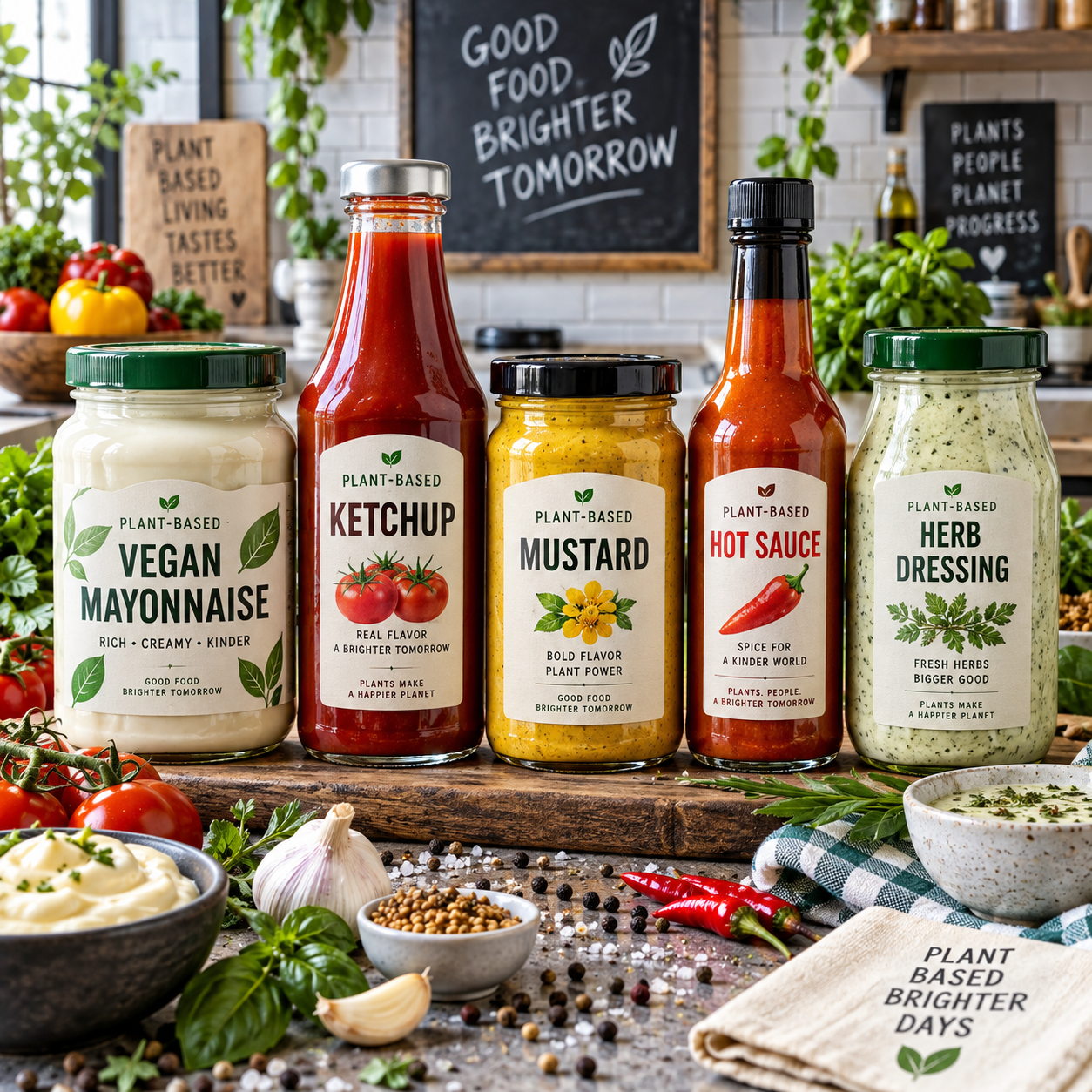
Plant-based condiment brands are changing how shoppers think about everyday sauces. Vegan mayonnaise, dairy-free dressings, modern ketchup, mustard, dips, and specialty sauces now compete on the same shelf as conventional products, with taste and convenience leading the conversation.
The shift reflects a wider change in consumer demand. People may be reducing animal products, checking ingredient labels, seeking new flavors, or simply looking for a dependable sauce that fits more diets at once. For brands, that creates an opportunity, but also a demanding brief: plant-based condiments must perform like familiar favorites while communicating their ingredients, purpose, and value clearly.
What Are Plant-Based Condiments?
Plant-based condiments are sauces, spreads, dressings, and dips made primarily from ingredients derived from plants. The category can include vegan products, although plant-based and vegan are not always identical claims.
A vegan condiment generally contains no animal-derived ingredients, such as eggs, dairy, honey, or gelatin. Plant-based can describe a product made mostly from plants, but the exact meaning depends on the brand and its labeling. A dairy-free condiment excludes milk ingredients but may still contain eggs, making some dairy-free mayonnaise unsuitable for vegans.
Clean-label products create another layer of distinction. Clean label is not a regulated definition; consumers may use it to describe a short ingredient list, familiar components, or the absence of artificial additives. A plant-based product can have a recognizable label without being minimally processed, while a longer ingredient list may be necessary for food safety, texture, or shelf stability.
These differences matter at the point of purchase. Shoppers with allergies, ethical restrictions, or specific dietary preferences should read the full ingredient declaration and allergen statement rather than relying on front-of-pack language alone. Guidance from the U.S. Food and Drug Administration can help consumers understand general food-labeling information.
Why Plant-Based Condiment Brands Are Growing
Plant-based condiment brands are growing because consumers want familiar foods that accommodate changing diets without sacrificing flavor, texture, or convenience. Sustainability concerns and greater ingredient awareness reinforce that demand.
Dietary change does not always happen in an all-or-nothing way. Some shoppers follow a vegan diet, while others eat plant-based meals several times a week or share a household with people who have different preferences. A versatile vegan sauce can therefore appeal beyond a narrowly defined audience.
Condiments are especially well positioned for experimentation. A jar of sauce can alter a sandwich, grain bowl, roasted vegetable, burger, or snack without requiring a complete change to the meal. That low-commitment format gives consumers a practical way to explore plant-based eating.
Sustainability also influences brand conversations, although no condiment should be treated as automatically sustainable. The overall picture depends on ingredient sourcing, farming practices, processing, packaging, refrigeration, transport, and food waste. Responsible brands avoid sweeping claims and explain what their packaging or sourcing choices actually address.
Ingredient awareness has grown alongside product variety. Shoppers increasingly look for dairy-free ingredients, recognizable oils, allergen information, and clear explanations of what gives a sauce its creaminess or texture. Brands that make those details easy to find can reduce uncertainty and build trust.
The Most Popular Plant-Based Condiment Categories
The most popular plant-based condiment categories include vegan mayonnaise, ketchup and sauces, mustard, dressings, dips, hot sauces, and specialty spreads. Their success depends on matching familiar culinary functions with plant-based formulations.
Vegan mayonnaise
Vegan mayonnaise replaces the egg traditionally used to create an emulsion. Aquafaba, vegetable proteins, starches, and other stabilizing ingredients can help produce a creamy texture, while oils provide richness. Consumers often use it in sandwiches, slaws, potato salads, burgers, and dips, so spreadability and a balanced tang are essential.
Ketchup and sauces
Ketchup is often naturally plant-based, but the wider sauce category offers more room for differentiation. Brands are developing smoky barbecue sauces, burger sauces, tomato relishes, globally inspired marinades, and sweet-and-spicy blends. The challenge is to make flavor complexity useful rather than overwhelming.
Mustard, dressings, dips, and hot sauces
Mustard usually relies on seeds, vinegar, salt, spices, and sometimes sweeteners. Dressings and dips may use tahini, beans, seeds, vegetable oils, herbs, or blended vegetables to create body. Hot sauces range from simple pepper-and-vinegar formulas to fermented products with fruit, garlic, or spices.
Specialty sauces are helping plant-based condiment brands move beyond imitation. Instead of reproducing one traditional product, a brand may build a distinct flavor identity around chili, herbs, roasted vegetables, or regional culinary traditions.

Ingredients Driving Innovation
Ingredient innovation allows plant-based condiments to reproduce familiar creaminess, binding, acidity, and depth while creating new flavor profiles. Aquafaba, vegetable oils, legumes, seeds, herbs, spices, and natural flavorings are among the most visible building blocks.
Aquafaba, the liquid associated with cooked chickpeas and other legumes, can help create foams and emulsions in egg-free recipes. It is useful in vegan mayonnaise because it contributes water, proteins, and carbohydrates that can support texture. The final result still depends on oil selection, acidity, mixing, stabilizers, and processing.
Vegetable oils provide the fat phase in many creamy condiments. Canola, sunflower, rapeseed, olive, and other oils can produce different flavor and mouthfeel outcomes. Choosing an oil for a neutral taste may improve versatility, while a more distinctive oil can become part of the product’s identity.
Legumes, seeds, and nuts add body and character to dips and dressings. Chickpeas, white beans, sunflower seeds, sesame, and other plant ingredients can help create thick textures, but they also introduce allergen and labeling considerations. A product made with sesame or nuts needs clear communication for shoppers managing allergies.
Herbs, spices, fermented ingredients, vinegar, citrus, garlic, and natural flavorings build complexity. These components can help a sauce taste satisfying without relying solely on sweetness or salt. However, natural flavoring does not automatically mean healthier or more sustainable, so transparent labeling remains important.
What Consumers Expect From Modern Condiment Brands
Modern condiment brands must deliver four things at once: enjoyable taste, reliable texture, clear information, and reasonable access. A product that succeeds on only one or two of these points may struggle to earn repeat purchases.
Taste comes first. Consumers expect a vegan mayonnaise to spread smoothly, a dressing to coat food without separating too quickly, and a hot sauce to provide heat alongside flavor. Texture is equally practical: watery dips, gritty sauces, or overly thick spreads can limit everyday use.
Versatility strengthens value. Packaging can show several serving ideas, from sandwiches and wraps to roasted vegetables and grain bowls. This matters because shoppers often compare a plant-based condiment with a familiar product they already know how to use.
Transparent labeling supports confidence. Useful information includes:
- Whether the product is vegan, vegetarian, or simply dairy-free
- Major allergens and possible cross-contact statements
- Ingredient order and meaningful flavor descriptors
- Storage instructions, refrigeration requirements, and use-by guidance
- Packaging materials and disposal information where relevant
Price and availability remain decisive. A premium formulation may justify a higher price through specialty ingredients or smaller-scale production, but frequent users still need a realistic cost per serving. Wider availability through supermarkets, online retailers, foodservice, and convenience channels can turn curiosity into routine use.
Packaging also performs a communication job. A clean visual identity can signal modernity, while clear front-of-pack claims prevent shoppers from having to decode the product. The strongest brands make the product’s role obvious within seconds.
Challenges Facing the Plant-Based Condiment Market
The plant-based condiment market faces challenges in formulation, shelf stability, flavor expectations, pricing, distribution, and consumer communication. Success requires solving practical food problems rather than relying on the plant-based label alone.
Eggs and dairy perform several technical functions in conventional sauces, including emulsification, viscosity, richness, and stability. Replacing them may require several ingredients and careful processing. A formula that tastes excellent when opened may still need to maintain texture through transport and the full shelf life.
Flavor expectations are unforgiving. Consumers compare a new plant-based product with a familiar favorite, not with the technical difficulty of creating it. Off-notes from certain oils, excess acidity, artificial-seeming flavors, or poor separation can quickly undermine repeat purchase.
Cost is another constraint. Specialty ingredients, smaller production runs, separate equipment, packaging requirements, and supply-chain volatility can raise prices. Choosing a more affordable formula may improve accessibility, but it can also affect mouthfeel or brand positioning.
Distribution presents a related problem. Refrigerated products may need more complex logistics, while shelf-stable formulas require robust preservation and packaging systems. Brands must decide whether convenience, a short ingredient list, or a particular texture matters most for the intended use.
Common mistakes brands should avoid
- Assuming plant-based means automatically healthier. This can create misleading expectations. Brands should describe ingredients and nutrition accurately instead.
- Using vague sustainability claims. Broad statements without evidence may weaken trust. Specific sourcing or packaging information is more credible.
- Overcomplicating the product story. Consumers need to understand what the sauce does, who it suits, and how to use it before they study its formulation.
- Ignoring mainstream taste preferences. Bold flavors can attract attention, but dependable texture and balanced seasoning usually drive repeat use.
The Future of Plant-Based Condiments
The future of plant-based condiments will likely bring broader product ranges, more refined formulations, clearer labeling, and positioning that welcomes both committed vegans and flexible shoppers.
Formulators will continue improving emulsions, texture, flavor balance, and shelf stability. Some innovation will focus on closer alternatives to mayonnaise or creamy dressings; other work will produce original sauces that do not need to imitate an animal-based reference.
Alternative proteins may appear more often in condiment development, particularly where brands want extra body or a distinctive nutritional profile. Their use will depend on taste, cost, allergen management, processing requirements, and whether consumers recognize the ingredient as useful rather than unfamiliar.
Product architecture may become more inclusive. A single sauce can serve vegan households, flexitarians, and consumers avoiding dairy, provided its claims remain precise. This broader positioning gives brands a larger audience without erasing the needs of people who require strict vegan or allergen information.
Packaging and retail access will also shape competition. Smaller brands can differentiate through flavor, sourcing, and community, while larger manufacturers can compete through price, distribution, and manufacturing scale. In both cases, the winning question is practical: does the condiment make everyday food taste better and fit easily into real routines?
Frequently Asked Questions
What makes a condiment plant-based?
A plant-based condiment is made primarily from plant-derived ingredients. Check the ingredient list because the term may not always mean that the product is fully vegan.
Are plant-based condiments suitable for vegans?
Some are, but not all. Vegan products should exclude animal-derived ingredients such as eggs, dairy, honey, and gelatin. Always verify the package claim and allergen information.
Which ingredients are commonly used in vegan mayonnaise and sauces?
Common ingredients include vegetable oils, vinegar or citrus, mustard, aquafaba, starches, legumes, seeds, herbs, spices, and natural flavorings. Formulas vary widely by product and desired texture.
How do plant-based condiments differ from traditional versions?
The main difference is the replacement of animal-derived ingredients, such as eggs in mayonnaise or dairy in creamy dressings. Brands must recreate functions including emulsification, richness, body, and stability.
What should shoppers look for on a plant-based condiment label?
Look for the exact vegan or plant-based claim, allergen details, ingredient list, storage instructions, nutrition information, and any sustainability statement that includes specific supporting information. A plant-based label alone does not guarantee a particular nutrition profile or environmental benefit.