Top 10 Must-Try Food Brands Around the World: Global Flavors Worth Exploring
Why Global Food Brands Matter to Every Kitchen
The best kitchens are rarely built on a single cuisine. Exploring international food brands opens up entirely new flavor profiles — the kind your local supermarket simply doesn't stock. A French-style grain mustard, a Japanese yuzu kosho paste, or a Trinidadian pepper sauce can transform a weeknight dinner into something genuinely memorable.
Beyond the taste upgrade, global food brands carry cultural weight. Each jar or bottle tells a story about a region's culinary tradition, its ingredients, and the people who perfected a recipe over generations. That context makes cooking more intentional and, honestly, more interesting.
Think of your pantry as a collection rather than a utility closet. The right international condiments and specialty sauces don't just add flavor — they add perspective.
How We Selected These Must-Try Brands
These brands were chosen based on five criteria: heritage and founding story, ingredient quality, flavor innovation, global reach, and a genuine fan following among home cooks and professional chefs alike.
No brand made this list purely because of corporate scale. A small-batch producer from southern Spain sits alongside a century-old British institution because both deliver something irreplaceable in their category. What matters is distinctiveness — the sense that you couldn't easily replicate what's in the bottle with something generic.
The list deliberately spans condiment categories: hot sauces, mustards, vinegars, spreads, and seasoning blends. That variety reflects how global food culture actually works — not as a single tradition, but as dozens of parallel ones, each with its own pantry heroes.
Top 10 Must-Try Food Brands Around the World
Each brand below represents its category and country of origin with genuine authority. These aren't novelty picks — they're products that serious cooks return to repeatedly.
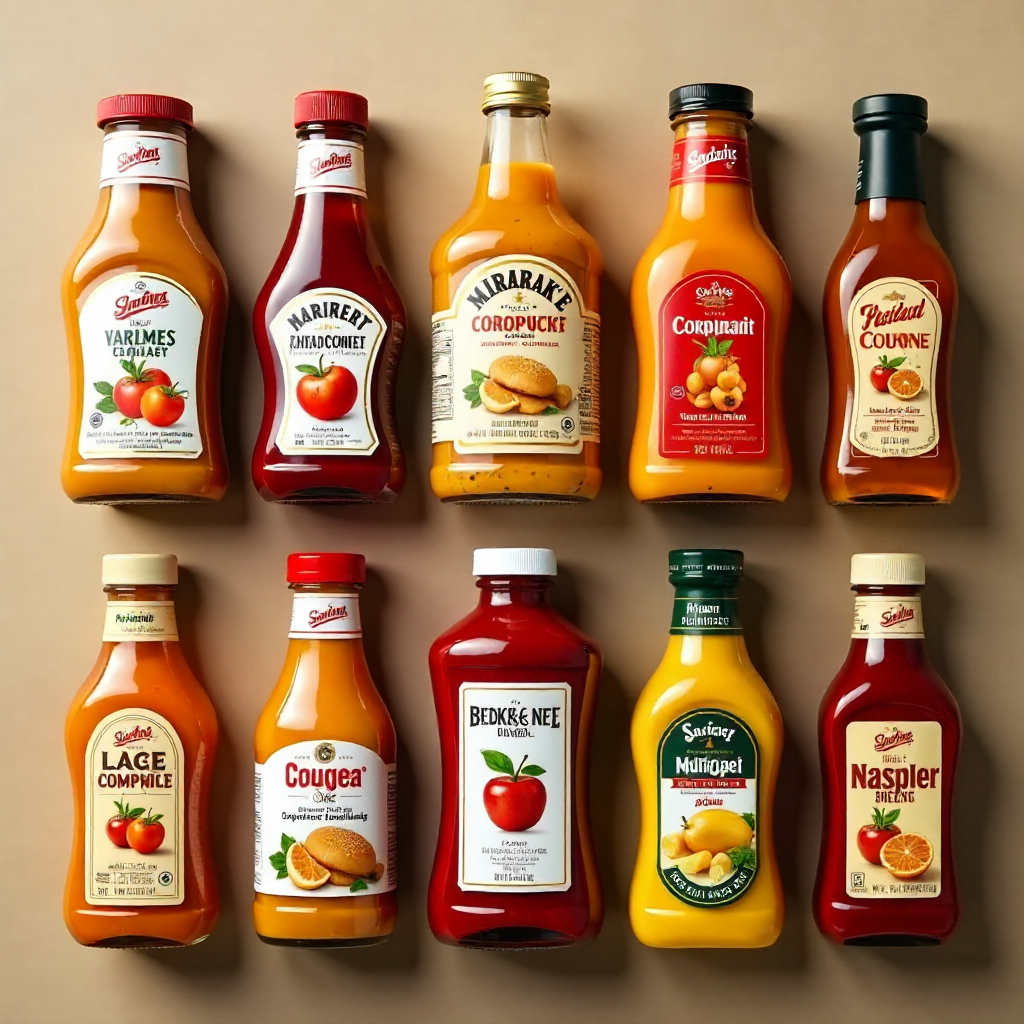
1. Tabasco (USA)
McIlhenny Company has been making Tabasco pepper sauce on Avery Island, Louisiana since 1868. Aged in oak barrels for up to three years, the original red sauce has a sharp, vinegary heat that's become a global benchmark for hot sauce. Their chipotle and habanero variants are equally worth keeping on hand.
2. Maille (France)
Founded in Paris in 1747, Maille is the definitive name in Dijon mustard. Their Old Style whole-grain mustard — made with brown and black mustard seeds — has a texture and depth that no supermarket generic comes close to matching. It's a pantry staple across French households and professional kitchens worldwide.
3. Kikkoman (Japan)
Kikkoman has been producing naturally brewed soy sauce since the 17th century. What sets it apart from cheaper alternatives is the fermentation process: wheat, soybeans, water, and salt, aged until the umami develops fully. The result is a sauce with genuine complexity rather than just saltiness. Their tamari variant is equally excellent for gluten-free cooking.
4. Cholula (Mexico)
Cholula's signature wooden cap is instantly recognizable, but the sauce inside is what earns its reputation. Made from pequin and arbol chiles, it delivers a smooth, layered heat that builds slowly rather than hitting immediately. It's become the preferred hot sauce for chefs who want flavor alongside the fire.
5. Marmite (UK)
Few food brands inspire the loyalty — and the division — that Marmite does. This concentrated yeast extract spread, a byproduct of beer brewing, has been made in Burton upon Trent since 1902. Spread thin on buttered toast, stirred into gravies, or used to deepen the flavor of stews, it's a masterclass in savory umami intensity. You either love it or you don't, but it's worth forming your own opinion.
6. Heinz (USA/UK)
Henry J. Heinz started selling bottled horseradish in 1869, and the company he built has since become one of the most recognized food brands on earth. Their tomato ketchup formula — unchanged for decades — remains a global reference point. But the real discovery for most people is their malt vinegar and their range of specialty sauces, which vary significantly by country.
7. Bonne Maman (France)
Bonne Maman's checkered-lid jars have become a symbol of artisan-style preserves done at scale without sacrificing quality. Their strawberry and apricot jams use whole fruit pieces and no artificial preservatives. The brand manages something rare: a mass-market product that still tastes genuinely homemade.
8. Valentina (Mexico)
Valentina is Mexico's best-selling hot sauce domestically, and it deserves far more international attention than it gets. Made in Guadalajara with dried pasilla peppers and spices, it's thicker and more complex than many better-known competitors. Sprinkled over fruit, drizzled on tacos, or mixed into marinades — it's one of the most versatile specialty sauces in any category.
9. Maggi (Switzerland/Global)
Maggi seasoning sauce was created in Switzerland in 1886 as an affordable way to add savory depth to simple meals. Today it's used differently across cultures — as a soup base in Southeast Asia, a stir-fry enhancer in West Africa, a taco topping in Mexico. That cultural adaptability is rare for any food product and speaks to how genuinely useful the flavor profile is.
10. Grace Foods (Jamaica)
Grace Foods represents Caribbean culinary tradition with a product range that spans coconut milk, scotch bonnet pepper sauce, jerk seasoning, and canned ackee. Their scotch bonnet hot sauce is fruity, fiery, and unlike anything produced in North America or Europe. For anyone building a global pantry, Grace is the essential Caribbean entry point.
What These Brands Have in Common
Across ten different countries and categories, a few patterns emerge clearly. Every brand on this list prioritizes ingredient integrity over cost-cutting shortcuts. Kikkoman still ferments naturally. Maille still uses whole mustard seeds. Tabasco still ages in oak. That commitment to process — even when it's slower and more expensive — is what separates a must-try brand from a commodity.
They also each have a clear flavor identity. You know exactly what you're getting. That consistency builds trust, which is why many of these brands have loyal customers who've used them for decades without switching.
Finally, every brand here has roots. Whether it's a 1747 founding date or a family recipe from Guadalajara, the heritage gives the product meaning beyond its ingredients. That's not marketing — it's what culinary tradition actually looks like when it survives long enough to become iconic.
How to Source and Shop These International Brands
Most of these brands are more accessible than you'd expect. Kikkoman, Heinz, Maille, and Bonne Maman are stocked in major supermarkets across North America, Europe, and Australia. Tabasco and Cholula have near-universal distribution in grocery stores globally.
For less widely distributed brands like Valentina, Grace Foods, or regional Maggi variants, specialty import shops are your best starting point. Caribbean and Latin American grocery stores typically carry Grace and Valentina. Asian supermarkets stock Kikkoman's full range, including variants unavailable in mainstream retail.
Online retailers have made international food sourcing significantly easier. Platforms like Amazon, specialty food sites, and brand-direct stores ship globally for most of the brands listed here. When ordering online, check production dates carefully — condiments and sauces have long shelf lives, but freshness still matters for flavor quality.
If authenticity is a concern, buying directly from the brand's official website or from a verified specialty retailer is the safest route. Counterfeit versions of popular sauces do exist in some markets, particularly for Maggi and Kikkoman.
How to Use These Brands in Your Everyday Cooking
Discovery is only half the value — knowing how to actually use these products is what makes them earn permanent pantry space.
- Maille Dijon mustard works as an emulsifier in vinaigrettes, a crust for roasted meats, and a base for cream sauces. One tablespoon in a pan sauce changes the entire dish.
- Kikkoman soy sauce goes beyond stir-fries — add a few drops to scrambled eggs, pasta water, or caramelized onions to deepen savory flavor without any Asian flavor profile.
- Tabasco or Cholula can be stirred into butter for a compound sauce, added to cocktail sauce for shrimp, or used as a finishing sauce on pizza instead of chili flakes.
- Marmite dissolved in hot water makes an instant savory broth. Mixed with butter and spread under chicken skin before roasting, it creates a deeply caramelized crust.
- Bonne Maman jam isn't just for toast — use it as a glaze for pork tenderloin or swirl it into plain yogurt for a quick dessert.
- Grace scotch bonnet sauce pairs naturally with grilled fish, rice dishes, and anything with coconut milk. Start with less than you think you need.
The broader principle: treat these condiments as ingredients, not just toppings. The brands that last for centuries do so because cooks find new uses for them constantly.
Frequently Asked Questions
What makes a food brand "globally recognized"?
A globally recognized food brand has distribution, reputation, or cultural influence that extends well beyond its country of origin. It's used and trusted by cooks across multiple continents, often appearing in professional kitchens as well as home pantries.
Are these brands available outside their home countries?
Most are. Tabasco, Kikkoman, Heinz, and Maille have extensive international distribution. Brands like Valentina and Grace Foods are easier to find through specialty import retailers or online. Availability varies by region, but all ten can be sourced globally with a little effort.
What's the best way to try international condiment brands for the first time?
Start with one new brand per month rather than buying ten at once. Use it in a familiar dish first so you can isolate the flavor contribution. Once you understand the brand's flavor profile, experimenting with new applications becomes much easier.
Can small or artisan food brands compete with large global names?
Absolutely — and in many categories, small-batch producers outperform corporate giants on flavor. The advantage of artisan condiments is ingredient quality and recipe integrity. The trade-off is usually price and availability. Both have a place in a well-stocked pantry.
How do I know if an imported food brand is authentic?
Check the label for the country of origin, manufacturer details, and official certifications. Buying from established specialty retailers or directly from the brand's website reduces the risk of counterfeit products. For well-known brands, the manufacturer's official product listing can help you verify what authentic packaging should look like.
Building a global pantry takes time, but it doesn't require a dramatic overhaul. Add one new brand from this list each month, learn how it works in your cooking, and let the collection grow naturally. The result — a kitchen stocked with genuine flavor from across the world — is worth every jar.